Creators
A video creator wants a consistent narration voice across episodes without recording every line personally.
Use the creator's own voice or a clearly licensed voice, then disclose synthetic narration when audiences could be misled.
Trust and safety
Is ai voice cloning illegal in every situation? No. The legal answer depends on consent, impersonation, ownership, commercial use, and the laws where you and the listener are located.
These related guides explain the technology, access options, and practical safeguards that shape responsible voice use.
AI voice cloning creates synthetic speech that resembles a source speaker. The technology is neutral; permission, disclosure, and intended use determine whether a project is responsible.
A video creator wants a consistent narration voice across episodes without recording every line personally.
Use the creator's own voice or a clearly licensed voice, then disclose synthetic narration when audiences could be misled.
An audiobook team needs revisions after the original narrator has approved a defined digital voice license.
Keep the license, scope, duration, and approval process documented before generating new chapters.
A studio wants character dialogue that sounds consistent during testing and production.
Use a performer-approved model or an invented character voice rather than copying an identifiable person without permission.
A research team studies speech interfaces using volunteer recordings and controlled demonstrations.
Collect informed consent, limit the dataset, protect recordings, and avoid presenting generated speech as a real statement.
A careful process separates technical capability from authorization. These checks help prevent an apparently harmless demo from becoming deceptive or harmful.
Identify whether the voice belongs to you, a consenting participant, a licensed performer, or a fictional source. Treat uncertainty as a reason to stop.
Write down where the audio will appear, who may hear it, whether it is commercial, and whether the output could be mistaken for an authentic recording.
Label synthetic audio when context could confuse listeners, restrict access to the model, and remove or pause the project if consent changes.
The same tool can support legitimate production or create serious risk. The difference is not the presence of AI voice cloning alone, but how it is authorized and presented.
| Misconception | What is more accurate | |
|---|---|---|
| Permission | If a voice sample is publicly available, anyone may copy it. | Public availability is not the same as permission to clone, publish, or monetize a voice. |
| Disclosure | A disclaimer always makes a deceptive recording acceptable. | Disclosure helps, but it does not replace consent or excuse fraud, harassment, or impersonation. |
| Ownership | The person who generates the file automatically owns every relevant right. | Rights may involve the speaker, performer, recording, script, brand, and contract terms. |
| Commercial use | Noncommercial use is always safe. | A noncommercial project can still cause reputational harm, violate privacy, or mislead an audience. |
| Impersonation | Only video impersonation creates a meaningful risk. | A convincing audio message can affect payments, trust, identity, and public reputation on its own. |
| Jurisdiction | One country's rule answers the question everywhere. | Voice, privacy, publicity, consumer-protection, copyright, and fraud rules vary by location and use. |
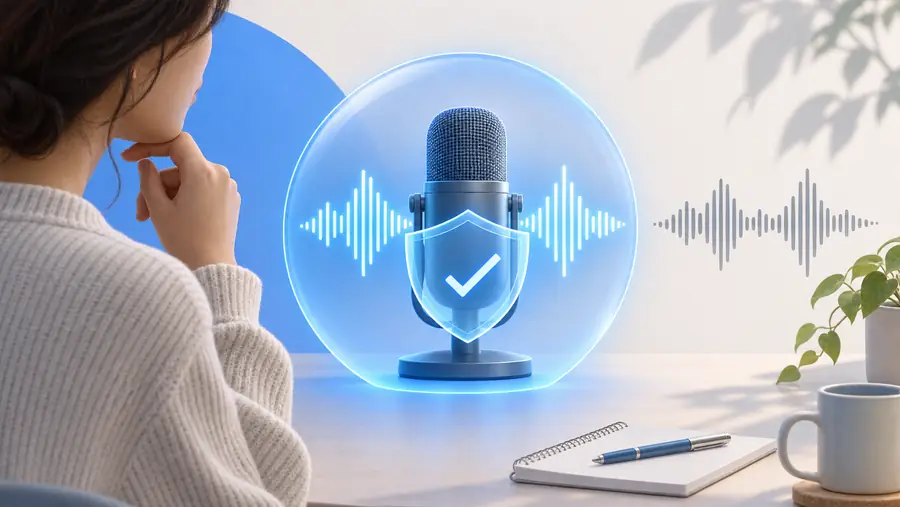
The file is not the whole compliance story; consent and context matter.
Unclear useDocumented and disclosed useSome situations carry too much risk for a voice model, even when the output would be technically possible.
Do not clone an identifiable person's voice from scraped clips, public posts, or a private recording without clear permission.
What to do instead
Use your own voice, a licensed performer, or an intentionally fictional voice.
Do not generate calls, announcements, endorsements, or emergency instructions designed to make listeners believe a real person spoke.
What to do instead
Use explicit disclosure and a clearly synthetic or authorized voice for legitimate demonstrations.
Do not rely on generated speech to authenticate identity, approve payments, deliver legal notices, or replace a verified human channel.
What to do instead
Require independent confirmation through an established contact method.
Do not keep using a voice model after the speaker withdraws permission or the original agreement no longer covers the project.
What to do instead
Pause publication, preserve records, and remove affected outputs while reviewing the agreement.
A responsible project starts with an authorized voice, a defined purpose, and honest presentation. If you cannot explain who approved the voice and where the audio will be used, pause before generating.
Not automatically. AI voice cloning can be lawful when the speaker has given appropriate permission and the use respects applicable privacy, publicity, consumer-protection, copyright, and contract rules. It can become unlawful or risky when used for impersonation, fraud, harassment, or unauthorized commercial exploitation.
It may be, depending on the jurisdiction, the person's identity rights, the source recording, and what you do with the result. Even where a specific voice-cloning law does not apply, privacy, fraud, unfair-dealing, or contract rules may still create liability.
A joke or parody is not automatically protected from all consequences. Context, audience confusion, commercial impact, local law, and whether the work harms or falsely endorses someone can all matter, so avoid presenting generated speech as an authentic statement.
You generally control the starting voice recording, but other issues can still matter, including the platform's terms, the script, a client's rights, and how the output is presented. Keep a record of what you authorized and avoid using your clone to misrepresent another person.
Use your own voice or a voice licensed by the performer, define the permitted purpose and duration, protect the model and recordings, and disclose synthetic audio when listeners could be confused. For legal advice about a specific project, consult a qualified professional in the relevant jurisdiction.