Narrator
A narrator wants to revise a sentence after recording the rest of a chapter.
With permission to use their own voice, they can assess a generated replacement for tone and continuity.
AI voice cloning creates new speech that resembles a particular person's voice. It learns patterns from voice samples, then uses those patterns to speak words the person may never have recorded. A convincing result is still synthetic audio, not proof that the person spoke.
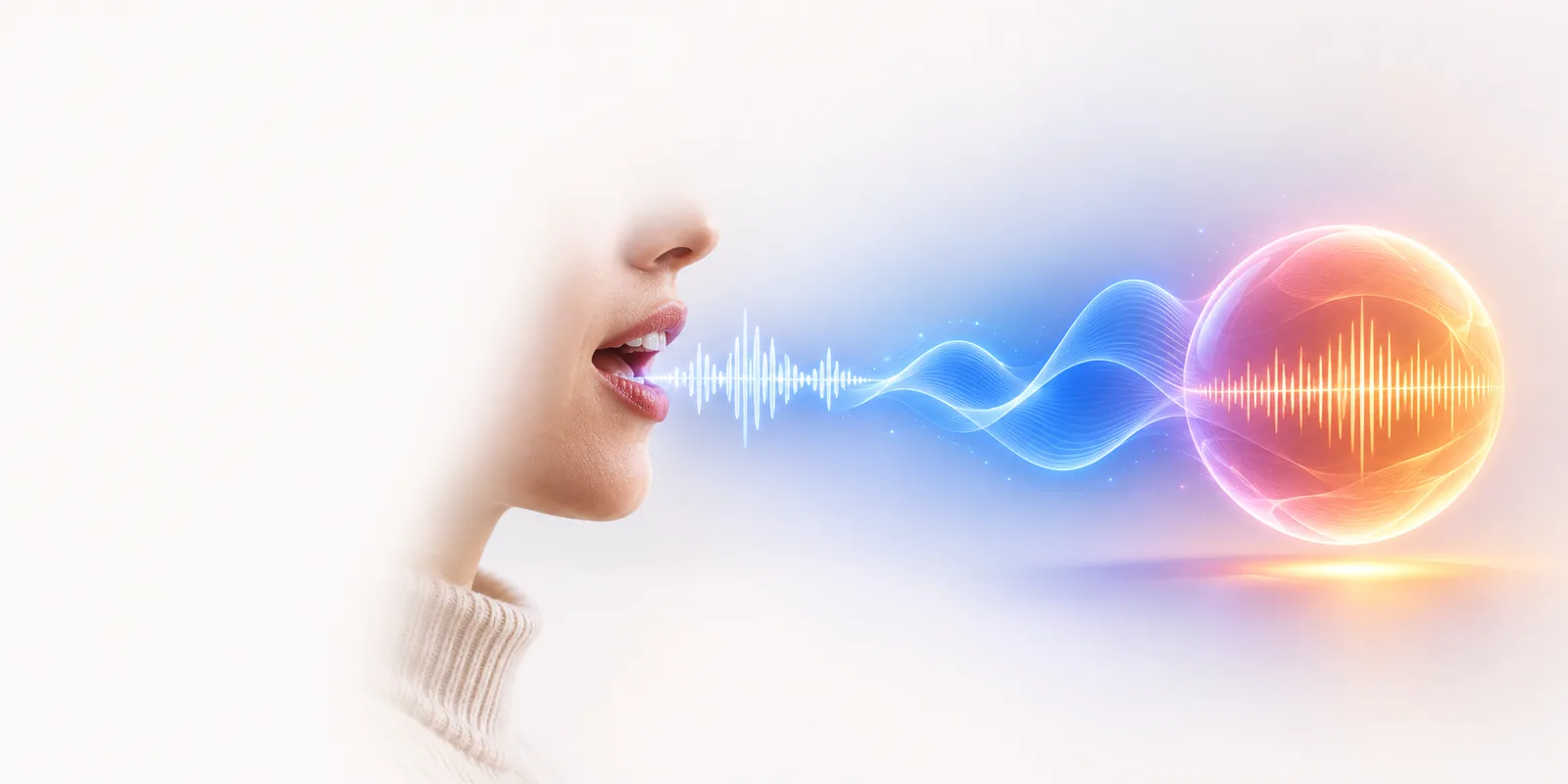
AI voice cloning is the process of learning the distinctive sound of a voice from recordings and using a model to generate new speech in a similar sound. The recording supplies examples; the model produces the new audio.
The purpose changes, but the distinction stays the same: a clone generates a new performance rather than retrieving a sentence from an old recording.
A narrator wants to revise a sentence after recording the rest of a chapter.
With permission to use their own voice, they can assess a generated replacement for tone and continuity.
A creator needs alternate wording for a voiceover they originally performed.
A draft can help them compare the revised script with the existing narration before publishing.
A singer is deciding whether a spoken-voice clone suits a melody.
They can distinguish ordinary speech generation from singing, which calls for control over pitch and timing.
An editor receives a voice sample from a collaborator for a shared project.
They can confirm permission and review the intended use before making synthetic lines.
The exact controls vary by service, but AI voice cloning generally follows three stages. Each stage affects how closely the result resembles the source and whether it sounds natural.
A recording provides examples of pronunciation, pitch, rhythm and vocal texture. Clear speech helps reveal those traits; background noise and overlapping speakers make them harder to identify. Use your own voice or obtain the speaker's informed permission.
The system analyzes the samples for recurring characteristics. It does not need to store a separate recording of every sentence it might later say. Different samples can emphasize different moods, accents or speaking styles, so the representation is not a complete portrait of a person.
Text or another supported input guides the model to produce a fresh audio performance. Listen for mispronunciations, unnatural pauses and changes in tone. Review the result as synthetic content before deciding whether it is suitable to share.
AI voice cloning can imitate audible traits and speak newly supplied words. It cannot establish who actually said those words, guarantee a perfect match or make an unauthorized imitation acceptable.
A familiar voice may be generated rather than recorded from the person it resembles. Audio alone is weak evidence of someone's identity or agreement, especially when the message asks for an urgent decision.
What to do instead
Verify consequential requests through a trusted contact method you already know.
A model may miss subtle emotion, unusual names, laughter or the way a speaker changes pace in conversation. A close timbre does not mean every generated sentence will sound like a natural performance.
What to do instead
Review each line by ear and use a fresh authorized recording when accuracy matters.
The technical ability to reproduce a voice does not grant permission to use someone's identity. Context also matters: an undisclosed imitation can mislead listeners even when the audio sounds polished.
What to do instead
Get clear permission for the intended use and identify synthetic speech when listeners might mistake it for a real recording.
This comparison is the quickest way to understand what a voice clone changes: the sound can resemble a speaker while the words come from a new generation.
| Original recording | Cloned speech | |
|---|---|---|
| Words heard | Words the speaker actually performed during the recording | New words supplied as input to a model |
| Source of the voice | Sound captured directly from the speaker | Sound generated from learned voice characteristics |
| New script | Requires another performance or an edit using existing audio | Can generate speech for a script not present in the samples |
| Delivery | Includes the speaker's actual timing and expression | May approximate delivery but can sound different or unnatural |
| Evidence of speech | Documents a captured performance, subject to editing and context | Does not establish that the speaker said the generated words |
| Permission | Recording and distribution still require appropriate rights | Voice samples and intended synthetic use also require appropriate permission |
Narrators, creators and editors may use AI voice cloning to test revisions or draft spoken content. Start with a voice you are entitled to use, then listen critically to any generated result. Aivoicecloning can point you toward voice creation; available features and access conditions are determined by the destination service.
It means using voice samples to help a model generate new speech that resembles a particular speaker. The generated words are not necessarily words that speaker ever recorded or said.
No. A playback repeats captured audio, while a voice clone generates new audio using characteristics learned from samples. Both may sound familiar, but they have different origins.
No. Similarity varies with the samples, the model and the sentence being generated. Pronunciation, emotion and pacing can still differ from the speaker's natural delivery.
No. Being able to make an imitation is different from having permission to use it. Get the speaker's consent for the intended purpose and avoid presenting synthetic audio as a genuine statement.