Workflow guide
Understanding elevenlabs voice cloning before you try it
If you are researching elevenlabs voice cloning, start with the decisions that affect any convincing result: whose voice you may use, whether the recording is suitable, and how you will review the generated speech. Aivoicecloning explains the workflow without claiming to be ElevenLabs or to reproduce its controls.
Find the right starting point
ElevenLabs is one named option in a broader ai voice cloning search. These guides separate basic concepts, speech generation, and tool comparison so you can follow the question you actually have.
- what does ai voice cloning mean Understand what a voice model learns from a recording and why a synthetic voice is not the original speaker.
- free ai voice cloning text to speech See how typed words and a voice reference serve different roles in spoken output.
- ai voice cloning alternative free Use a practical checklist when comparing access terms and voice-cloning workflows.
Three limits to check before making a voice
A voice-cloning page cannot establish your rights to a recording or guarantee that a generated reading will sound natural. Treat those as separate checks, not settings to skip.
Consent is not a technical setting
This guide cannot grant permission to use another person's voice. Even a publicly available interview may be protected by consent, privacy, publicity, or contractual rules.
What to do instead
Use your own recording or obtain clear permission for the intended use before uploading a sample anywhere.
A sample cannot capture every delivery
A short, noisy, or heavily processed clip may obscure pronunciation, rhythm, and tone. AI voice cloning may reproduce some audible traits without reliably matching every emotion or speaking style.
What to do instead
Choose a clean recording you have the right to use, then test several passages rather than judging one sentence.
This route is not an ElevenLabs workspace
Aivoicecloning does not host ElevenLabs controls, inspect its current access terms, or verify what a particular account can create. A tool's available features can change.
What to do instead
Check the provider's current documentation and terms before committing a project or sharing sensitive audio.
Review a voice-cloning workflow step by step
Whether you evaluate ElevenLabs or another service, the useful test is a permitted sample, a representative script, and a careful listen—not a claim that every voice will transfer perfectly.
-
1
Confirm the source
Identify the speaker, document permission, and select audio with little background noise. Keep a copy of the original so you can compare the result with the material actually supplied.
-
2
Prepare a useful script
Include names, numbers, questions, and the kind of sentence length your project needs. A varied script reveals pronunciation and pacing problems that a short greeting may hide.
-
3
Listen, revise, and disclose
Check intelligibility, emphasis, and unintended resemblance before publishing. Revise the script or sample if needed, and tell your audience when a voice is synthetic where disclosure is appropriate.
What to verify in ElevenLabs and in any alternative
This is a research checklist, not a feature-by-feature product score. Confirm current provider policies directly; this page cannot determine which controls your account will show.
| ElevenLabs research | Any other voice tool | |
|---|---|---|
| Voice rights | Read the current voice-use and consent requirements. | Read its own rules; permission is still necessary. |
| Input audio | Check accepted recordings and sample guidance. | Check accepted recordings independently. |
| Speech input | Test text resembling your intended script. | Use the same script for a fair listening test. |
| Pronunciation | Listen for errors in names and uncommon words. | Compare the same difficult words. |
| Usage terms | Verify current publication and commercial-use terms. | Verify the alternative provider's terms separately. |
| Data handling | Review retention and deletion information. | Review its retention and deletion information. |
From a reference recording to a spoken draft
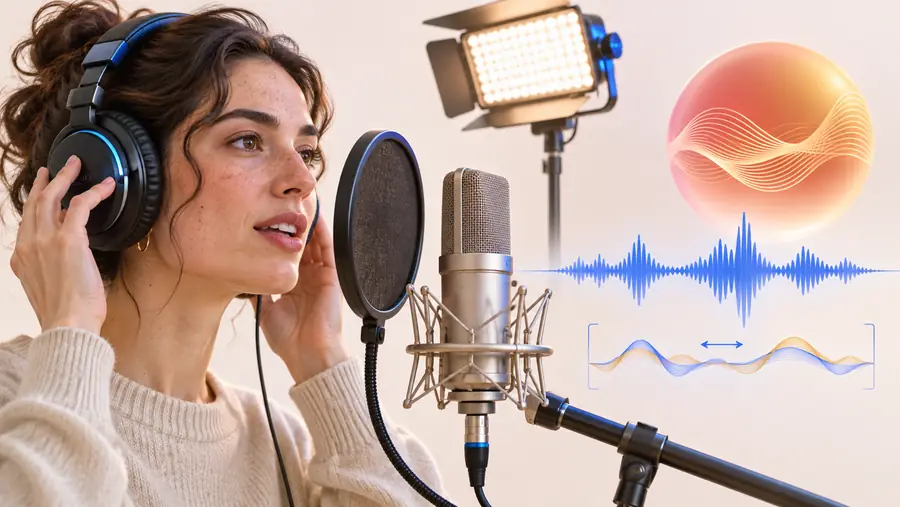
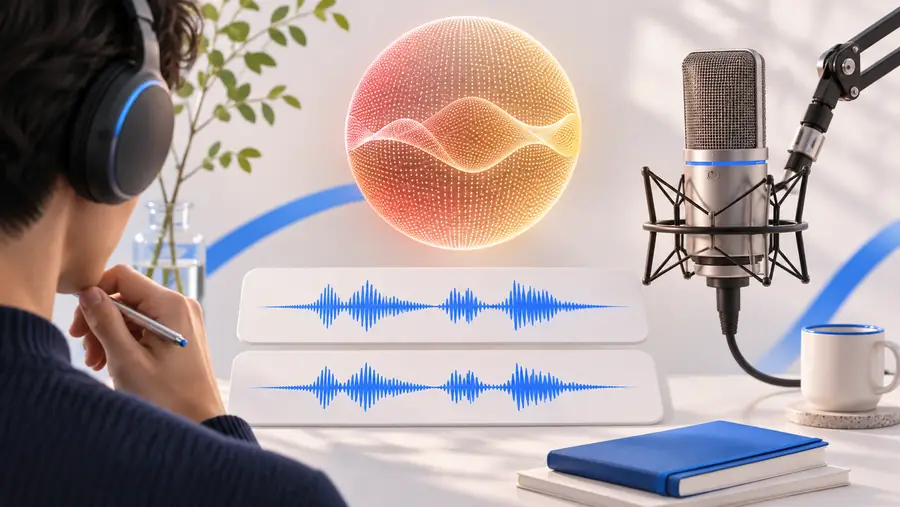
Illustrative workflow, not ElevenLabs screenshots or a guaranteed transformation. AI voice cloning still requires listening checks before a draft is used.
Permitted referenceDraft to reviewExplore a voice project with informed expectations
Start with audio you are authorized to use and a script that reflects your real project. The button leads to a separate voice product; check its current features, terms, and access requirements there rather than assuming they match ElevenLabs.
Take the next step with a permitted voice
- Confirm consent before sharing audio
- Test realistic words and sentence lengths
- Review synthetic speech before publication
ElevenLabs voice cloning questions
It refers to using ElevenLabs to create synthetic speech modeled on a voice reference. The result is generated audio, not a recording of the speaker saying the new words. Check the provider's current documentation for its available methods and requirements.
You should have the speaker's authorization for the intended use, especially if the voice belongs to someone else. Access to an online clip does not, by itself, establish permission to make a synthetic version. Check applicable law and the provider's current rules.
No exact match should be assumed. Recording quality, script content, pronunciation, and delivery can all affect what listeners hear. Compare several representative passages rather than relying on a single sample.
Use the same authorized reference and test script where each provider permits it. Compare intelligibility, difficult words, consent rules, data handling, and current usage terms. Do not assume two products offer identical features or access.